Exterior Design That Ages Well: Materials and Proportion
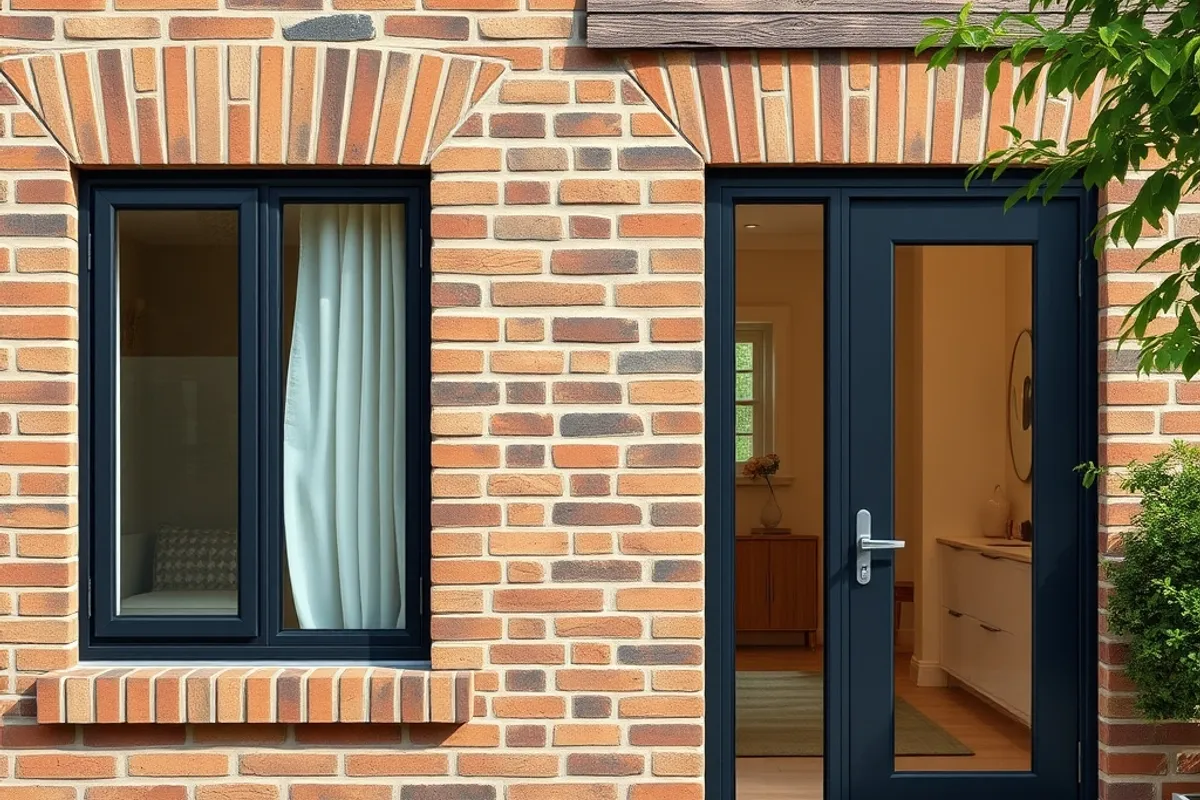
A house exterior is judged twice: once when it is new, and again after ten years of sun, rain and settling. The first impression is easy to buy. The second is earned by materials, detailing and proportion. Good exterior design is not the loudest house on the street; it is the one that still looks right when the trend has moved on.
Key facts
- Proportion and window rhythm matter more than surface colour.
- Natural materials weather gracefully; thin imitations often do not.
- Detailing at roof edges, reveals and junctions decides water performance.
- A simple palette of two or three materials usually ages best.
- Maintenance access should be designed in, not improvised later.
Get the proportions right first
Before choosing brick or cladding, check the massing. A facade reads well when windows align, the roof sits comfortably on the walls and the entrance is clear. Ground-floor windows are often made too small and upper windows too large; adjusting the rhythm can transform a plain elevation without changing a single material. Draw the facade flat and look at it as a composition, not a collection of products.
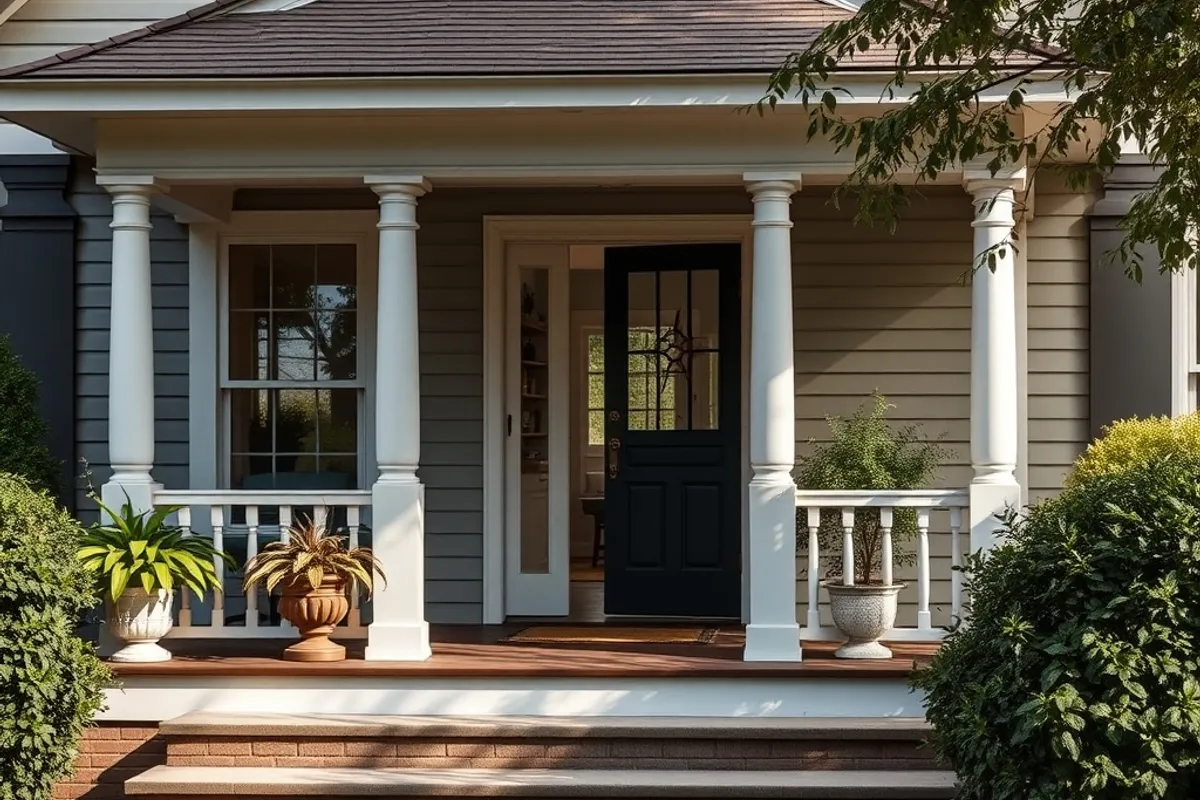
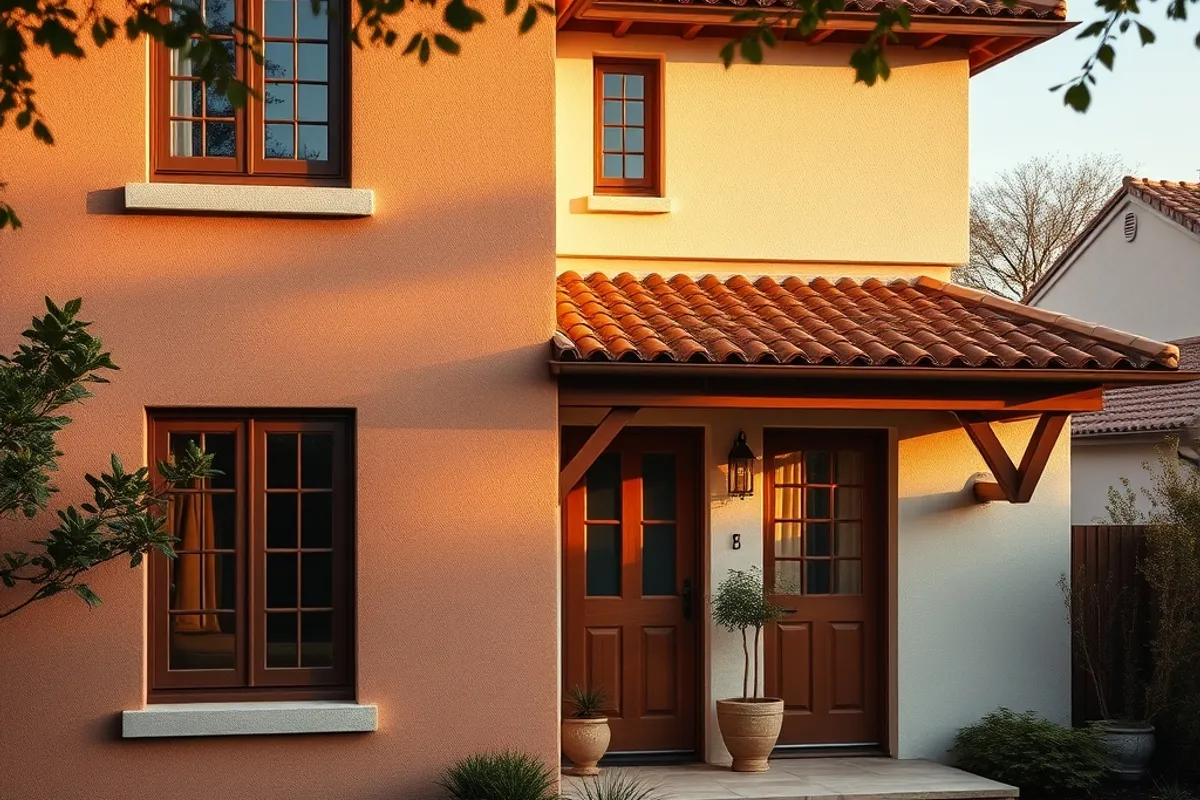
Depth matters too. Recessed windows, a projecting porch or a deep eaves line create shadow, and shadow gives a facade character. A completely flat wall with surface-only decoration tends to look thin. Even a modest projection can make a house feel more considered.
Choose materials that weather honestly
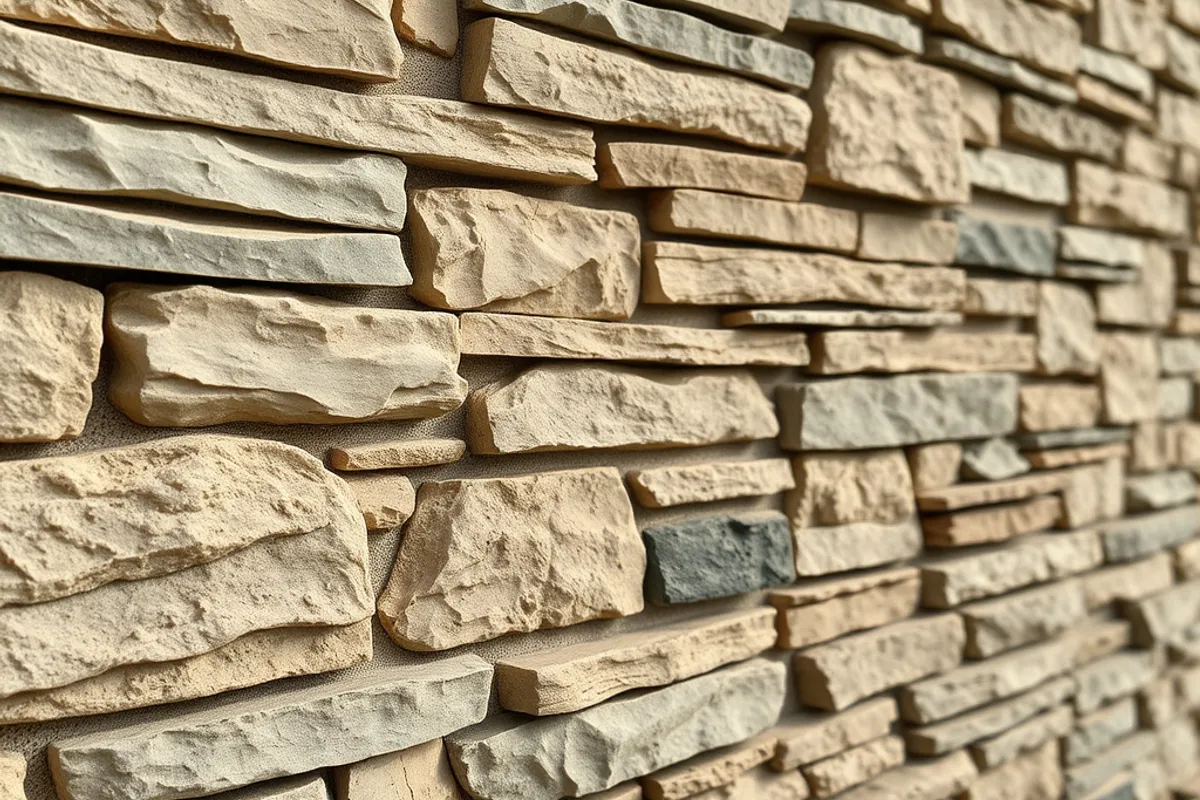
Brick, stone, timber, render and metal all change with age. Some improve: clay brick softens, natural timber silvers, stone develops patina. Others degrade: thin veneers can delaminate, low-grade render can craze, and painted surfaces need regular renewal. Ask how each material will look in a decade, and who will maintain it. A material that needs specialist access every few years is a long-term cost, not a one-off choice.
Match the material to the climate. In wet regions, drainage, breathability and frost resistance matter. In hot regions, shading and thermal mass matter more. Local materials often perform better because they have been tested by the local climate for generations. There is also a visual benefit: a house built from the materials of its region tends to sit naturally in the street.
Detail for water and movement
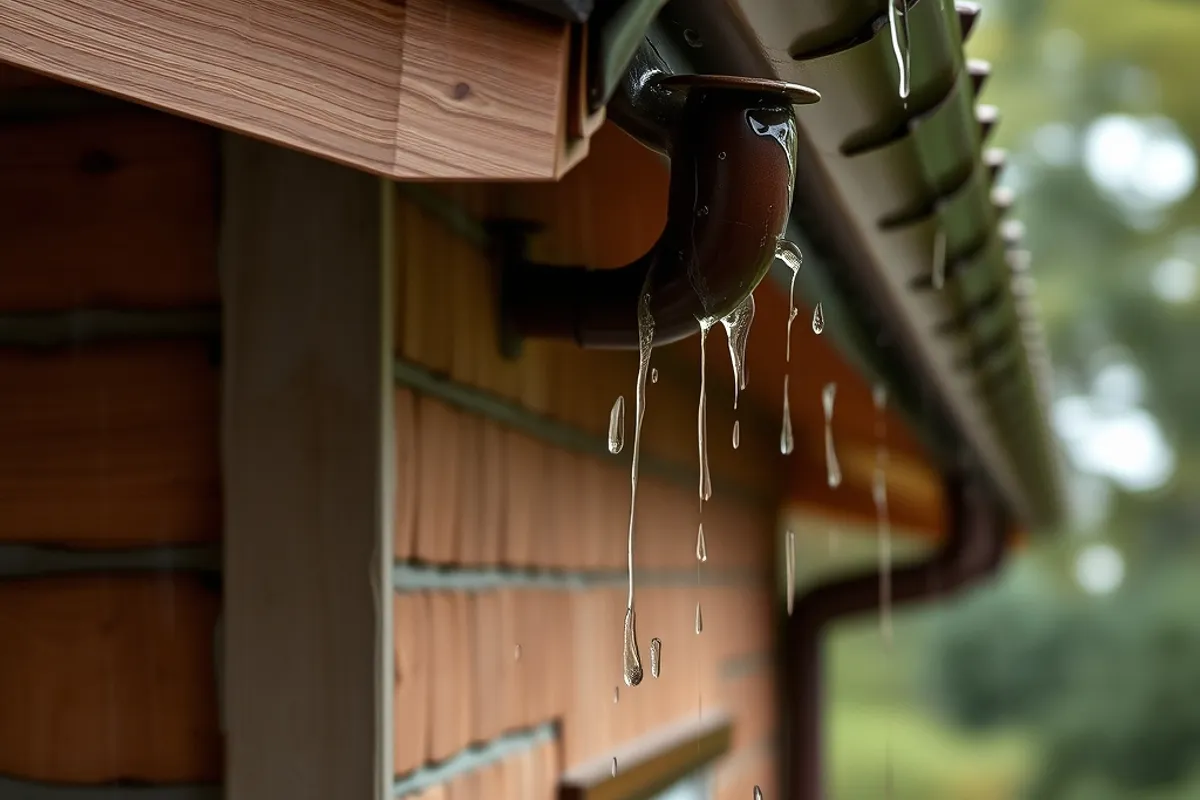
Most exterior failures start at junctions. Roof edges, gutters, window reveals, parapets and the base of walls all need clear drainage and sensible overhangs. Sealant is not a substitute for a properly layered detail. Movement joints should be planned where materials meet, and fixings should be compatible to avoid corrosion. Water that gets behind a facade needs a path out.
A facade is not a picture. It is a weather skin that has to work for decades.
Keep the palette disciplined
Two or three materials are usually enough. A dominant wall material, a secondary material for a feature or base, and a consistent window frame colour will hold together longer than a patchwork. Use colour to support the architecture rather than to compensate for it. If the form is simple and the proportions are good, a restrained palette looks confident; if the form is weak, more colours rarely fix it.
Consider how the house looks in different light. North-facing facades read cooler and flatter; west-facing facades catch strong evening sun. Test samples on site rather than choosing from a brochure. A colour that looks elegant indoors can turn harsh outside.
Plan maintenance from the start
Design access for cleaning gutters, painting frames and inspecting roofs. A facade that cannot be reached safely will be neglected. Choose finishes with realistic maintenance intervals and keep a record of products and colours for future repairs. A small budget set aside each year is easier than a large remedial bill later.
For the front-of-house details, read our facade makeover guide, or browse all exterior design articles.
Further reading from independent sources: International Code Council and Energy Star.